Breaking

Global ARM submitted its recommendations for the FY27 State, Foreign Operations, and Defense Appropriations bills, developed in consultation with the administration, bipartisan Members of Congress, and stakeholders both in Washington and Armenia, calling for stronger U.S. support for Armenia’s security and the U.S.–Armenia strategic partnership.
- Global ARM urges building on the growing bilateral relationship, including the U.S.–Armenia Strategic Partnership Charter, recent peace initiatives, and agreements reached during Vice President JD Vance’s February 2026 visit to Yerevan.
- $20 million in Foreign Military Financing (FMF) to support Armenia’s defense modernization and strengthen deterrence capabilities.
- $10 million for International Military Education and Training (IMET) to expand professional military training and deepen U.S.–Armenia defense cooperation.
- $50 million in defense security cooperation funding to support capacity building and regional stability in the South Caucasus.
- Legislative language recommending that certain U.S. assistance be reviewed if Azerbaijan fails to withdraw forces from sovereign Armenian territory, release Armenian political prisoners, ensure the right of return for ethnically-cleansed Armenians from Nagorno-Karabakh, preserve Armenian cultural and religious heritage, and cease aggression against Armenia.
- Oversight of the Trump Route for International Peace and Prosperity (TRIPP) initiative to establish a U.S.-supported multimodal transit route through southern Armenia.
- Continued U.S. engagement to help Armenia strengthen its security partnerships and advance long-term regional peace and stability.
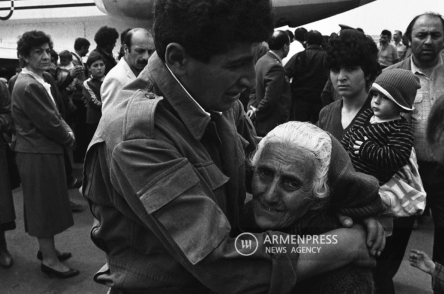
Armenian Foreign Ministry Commemorates 38th Anniversary of Sumgait Massacres
The Sumgait massacre of February 27-29, 1988, unleashed hell on the Armenian community in Azerbaijan. Mobs rampaged through the streets for three days, raping, torturing, burning alive, and murdering, mostly unhindered by police. Official Soviet counts claim 32 dead (26 Armenians), but witnesses and Armenian records point to over 200 Armenians slaughtered, with hundreds more injured and 18,000 fleeing the city overnight. It ignited the Nagorno-Karabakh war and a wave of ethnic cleansing, displacing half a million Armenians from Azerbaijan.
Commemoration serves not only as reflection on the past but also as a reaffirmation of efforts toward reconciliation and establishing lasting peace.
Congressional Armenian Caucus Urges Expanded U.S. Support for Armenia and Accountability for Azerbaijan in FY27 Funding
Caucus Letter in Strong Alignment with Global ARM’s Priorities
Members of the Congressional Armenian Caucus called on the House Appropriations Subcommittee on National Security, Department of State, and Related Programs to strengthen U.S. assistance to Armenia while holding Azerbaijan accountable for human rights abuses and aggression.
Key requests include:
- Expanded security assistance for Armenia, including $20 million in Foreign Military Financing (FMF) and $10 million in International Military Education and Training (IMET) to strengthen Armenia’s defense capabilities and deter further Azerbaijani aggression.
- $100 million in humanitarian funding to support over 100,000 Armenians forcibly displaced from Nagorno-Karabakh following Azerbaijan’s 2023 ethnic cleansing campaign.
- Conditions on U.S. assistance to Azerbaijan, requiring the release of Armenian detainees, withdrawal of Azerbaijani forces from sovereign Armenian territory, protection of Armenian cultural heritage, and recognition of the right of return for displaced Armenians.
- Consideration of Global Magnitsky sanctions against Azerbaijani officials responsible for human rights abuses, including the detention and mistreatment of Armenian prisoners.
- Congressional oversight of the “Trump Route for International Peace and Prosperity (TRIPP)” initiative, including guarantees that Armenia’s sovereignty is protected and that the route is not used for military purposes.
Rep. Frank Pallone, who led the letter with 46 members of Congress, emphasized the importance of strengthening the partnership: “Armenia and the U.S. are cooperating more than ever before, and it’s important we get this cooperation right.”

Cybersecurity As A Catalyst For Digital Trust In Emerging Tech Hubs
Armenia’s technology sector continues to expand.
Azerbaijan’s Ethnic Cleansing in Nagorno-Karabakh and Genocidal Policy
USCIRF Vice Chair Calls for Azerbaijan to Be Designated “Country of Particular Concern”
In a dissent included in the U.S. Commission on International Religious Freedom (USCIRF) 2026 Annual Report, Vice Chair Vicky Hartzler argued that Azerbaijan should be designated a Country of Particular Concern rather than remain on the Special Watch List, citing ongoing and severe violations of religious freedom.
Hartzler pointed to extensive government control over religious activity. She also raised concerns about the treatment of religious prisoners, including Armenian Christian prisoners who were tried behind closed doors without adequate legal counsel, have received beatings, psychological abuse, lack of access to medical care and proper food, denials of Bibles, and the erasure of cross tattoos through burning.
The dissent also highlights the destruction of Armenian religious heritage in Nagorno-Karabakh, where satellite imagery has documented multiple damaged or destroyed churches, cemeteries, and other sacred sites.
Hartzler concluded with a direct warning to Baku: “Azerbaijan’s treatment of religion and its people needs to change. If Azerbaijan wants to be a full partner with the United States and advance shared economic and strategic goals, it needs to take meaningful steps to truly embrace religious freedom.”
Armenian Genocide Memorial’s Director Forced to Resign After Vance Visit
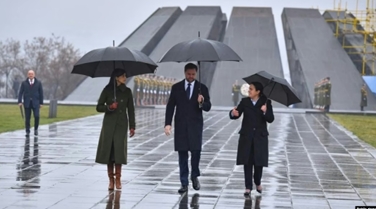
Just weeks after showing U.S. Vice President JD Vance around the Armenian Genocide Museum-Institute in Yerevan, its respected director, Edita Gzoyan, has resigned under orders from Armenia’s government.
Vance and his wife, Usha, visited the memorial at the end of an official trip to the Armenian capital on February 10. After they laid flowers by its eternal fire dedicated to the victims of the 1915 genocide, Gzoyan escorted them to other parts of the complex, including cross-stones placed in memory of Armenians killed in pogroms in Azerbaijan that followed the outbreak of the Nagorno-Karabakh conflict.

EU Stresses Humanitarian Urgency of Armenian Prisoners Held in Azerbaijan
EU Foreign Affairs spokesperson Anitta Hipper stated that the European Union supports the peace process between Armenia and Azerbaijan and considers the issue of prisoners and missing persons a critical humanitarian matter that must be resolved.
Azerbaijan continues to detain at least 19 Armenian prisoners of war, including members of the former military-political leadership of Nagorno-Karabakh, who were sentenced following trials described as based on fabricated criminal charges.
The EU emphasized that resolving humanitarian issues, including the fate of Armenians held in Azerbaijan, is essential for building lasting peace and remains part of its ongoing engagement with the parties and international partners.
EU Allocates More than €78 Million over Three Years to Support Displaced Karabakh Armenians
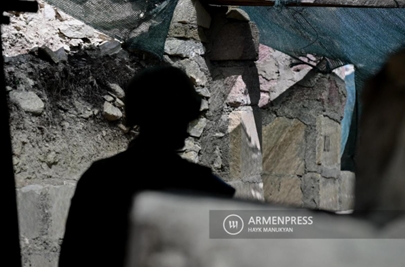
Armenia Reports 195 Missing Persons from the 2020 Nagorno-Karabakh War
Armenia’s Minister of Justice Srbuhi Galyan stated that 195 Armenians remain missing following the 2020 Nagorno-Karabakh War, including 175 servicemembers and the rest civilians.
Photo of the Week
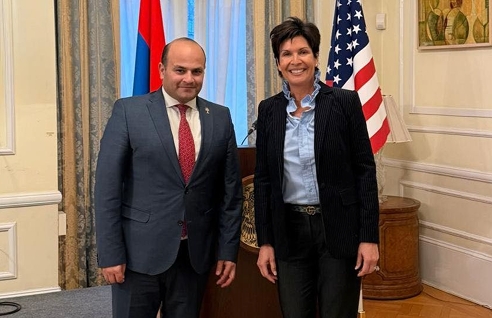
On March 3, Armenian Ambassador Mkrtchyan welcomed Lisa Dale, Senior Vice President of the Trump-Kennedy Center for Performing Arts, to the Embassy in Washington. Their discussion explored promising avenues for collaboration between the Center and Armenia.
Photo Courtesy of Embassy of Armenia to the U.S.
Security
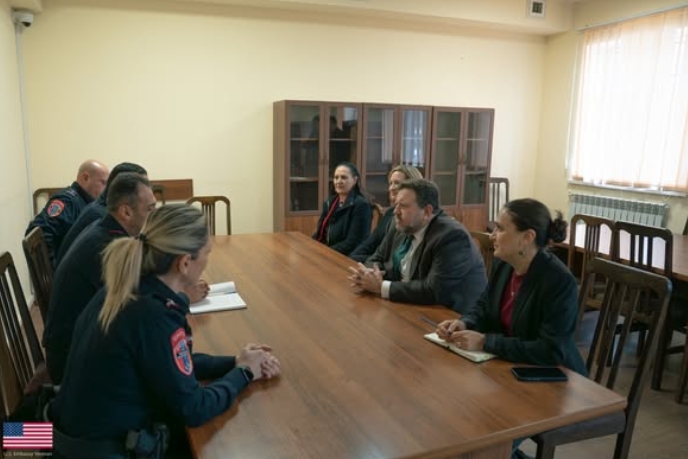
U.S. Support for Law Enforcement Cooperation in Armenia
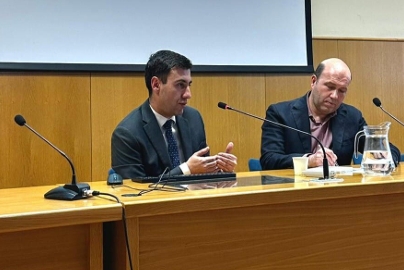
Armenia–Azerbaijan Peace Process Discussed at Madrid Conference
The event on the Armenia–Azerbaijan peace process was held at Complutense University of Madrid, organized by Sos Avetisyan and the Embassy of the Republic of Armenia in Spain.
Ambassador Avetisyan outlined the current status of Armenia–Azerbaijan negotiations and reaffirmed Armenia’s commitment to achieving stable and lasting peace in the region.
The conference included a focus on the TRIPP initiative, and Ambassador Avetisyan concluded by answering questions from attendees, fostering dialogue on peace efforts.
Economy
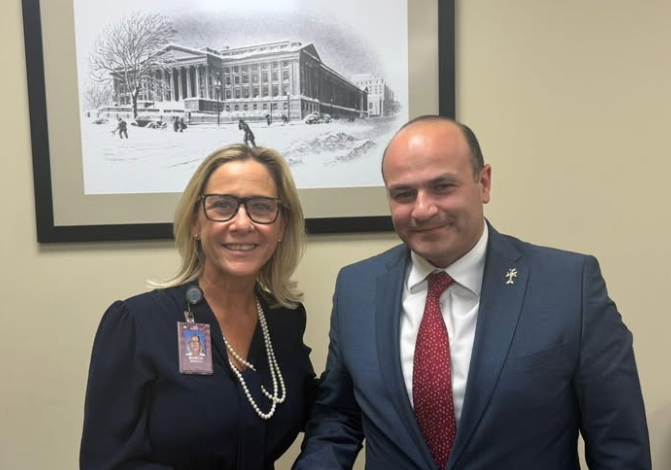
Armenia–U.S. Dialogue on Economic and Financial Cooperation
Ambassador Narek Mkrtchyan met with Deputy Assistant Secretary Rebecca Burch at the U.S. Department of the Treasury to discuss key aspects of Armenia–U.S. economic and financial relations.
The sides exchanged views on Armenia’s ongoing reforms and explored opportunities to deepen mutually beneficial cooperation, emphasizing the importance of strengthening dialogue between relevant Armenian and U.S. authorities.
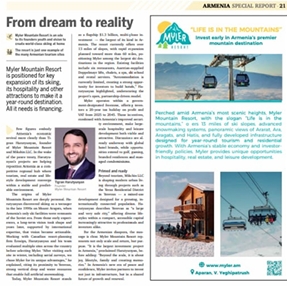
Los Angeles Times Highlights Armenia’s Investment Potential and Emerging Development Projects
The prestigious Los Angeles Times published a special report presenting Armenia’s economic environment, development priorities, and investment opportunities to a global audience.
The report gave special attention to Myler Mountain Resort and Mikshin as examples of projects strengthening Armenia’s position in tourism, real estate, and lifestyle development. Mikshin’s founder, Tigran Harutyunyan, was highlighted for advancing initiatives that reposition Armenia as a competitive and stable regional hub for long-term investment.
Education
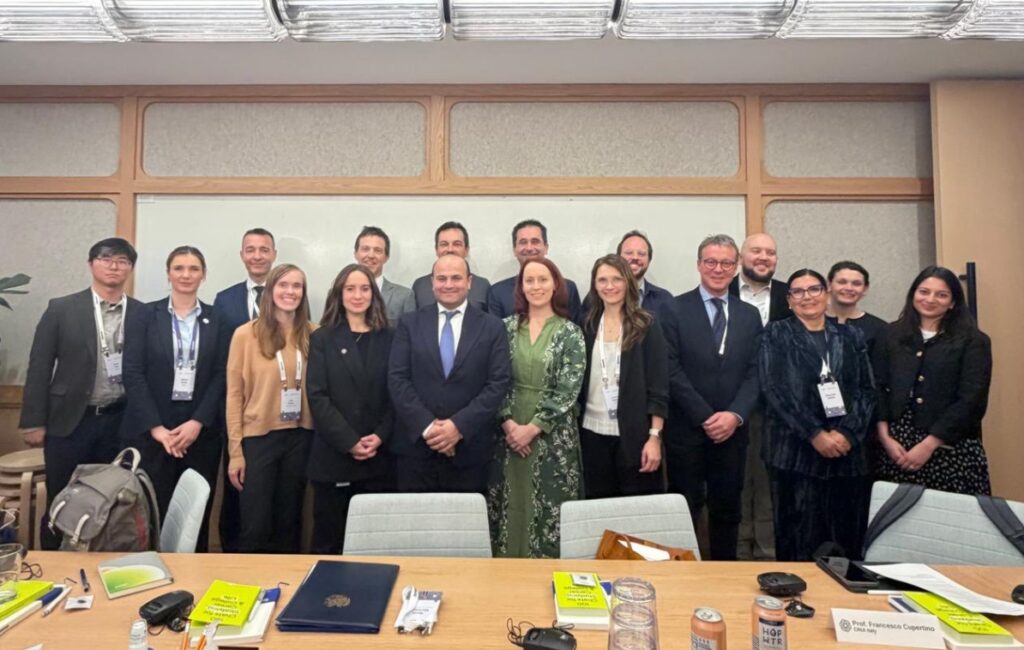
Armenia-OpenAI Dialogue on Education and Artificial Intelligence
Ambassador Narek Mkrtchyan represented Armenia at the OpenAI Education Summit held at OpenAI headquarters in San Francisco, alongside officials from countries already cooperating with or exploring collaboration opportunities with OpenAI.
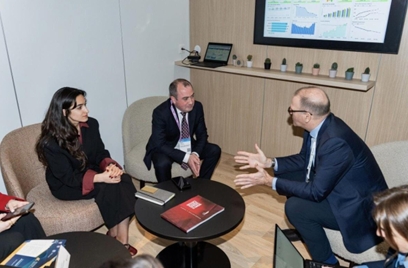
Armenia and Microsoft Discuss Expanding High-Tech Cooperation at Mobile World Congress 2026
Ruben Simonyan presented Armenia’s government strategy focused on digital transformation, a data-driven economy, and strengthening the national high-tech ecosystem through cooperation with global tech leaders.
During the meeting with Philippe Rogge of Microsoft at Mobile World Congress 2026, the sides discussed expanding collaboration in artificial intelligence, cloud technologies, and public-sector innovation.
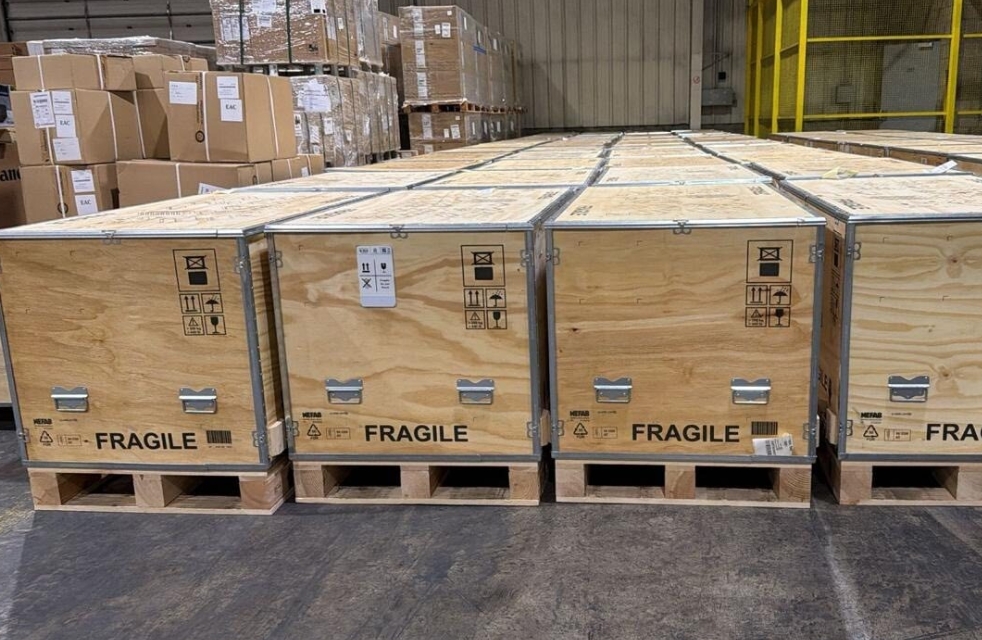
Armenia Receives First Batch of High-Performance AI Equipment to Boost Digital Infrastructure
Minister of High-Tech Industry Mkhitar Hayrapetyan announced that the first batch of high-performance AI equipment (GPUs) has arrived in Armenia, marking a key milestone in developing next-generation AI data infrastructure.
Opinion
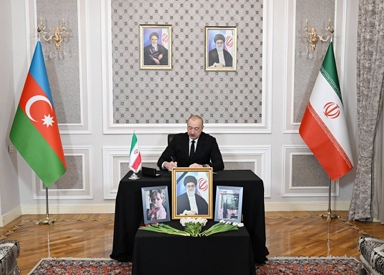
Why Azerbaijan Quietly Needs Iran’s Mullahs it Publicly Despises
Azerbaijan’s relationship with Iran is built on a central paradox: Baku’s strategic relevance to the West, Israel, and the global transit economy depends almost entirely on Tehran remaining isolated, theocratic, and weak.
Baku does not ‘support’ the mullahs, but its strategic model is structurally parasitic on Iranian isolation.
110 Years Later, the Perpetrator Becomes the Host
Germany’s role in the Armenian Genocide is rarely treated as a central chapter in the country’s reckoning with its past.
Germany was not only an ally of the Ottomans during World War I; the alliance was intrinsic to facilitating the Armenian Genocide. Berlin later became a safe haven for key Ottoman officials who orchestrated the genocide, including Interior Minister Talaat Pasha.
A year of Armenian Genocide commemoration in Berlin with such a large scale of representation and media attention was unprecedented in the German capital.

Aliyev’s Forked-Tongue Policy: Peace Meets Anti-Armenian Propaganda
The prevailing narrative coming out of Baku is a unique blend of paradoxical sophistry: speak to the international community, especially the United States, in the language of peace, while domestically, speak to the Azerbaijani people in the language of anti-Armenian propaganda and hate speech.
The harvested data on the “territorial claim” category demonstrated continued irredentist claims, historical revisionism, and supplanting of Armenian cultural, historical and religious facts with artificial Azerbaijani constructs.
But what Aliyev cannot do is lie to those who know: the data speaks for itself, and until trends in such data show shifts in the opposite direction, it is difficult to view a regime that has developed the information ecosystem that Aliyev has as one that is willing to agree to comprehensive and sustainable peace.
For more information, please contact info@globalarm.org
Global ARM | 7910 Woodmont Avenue, Suite 120 | Bethesda, MD 20814 US