Election Wrap-Up: Nikol Pashinyan’s Victory Confirms Armenia’s Shift Toward Europe
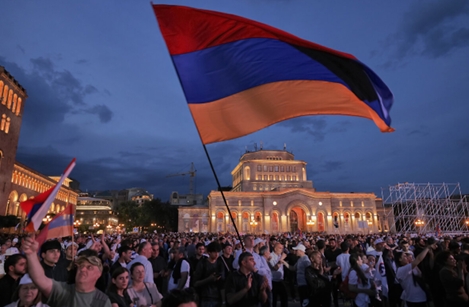
Armenian Prime Minister Nikol Pashinyan hailed a “historic victory” on June 8, following the parliamentary elections held the previous day. Pashinyan’s Civil Contract party secured a majority with 61 of 105 seats.
This reportedly enables Pashinyan to form a government independently without coalition partners and to control the legislative agenda, comfortably surpassing the 53-seat threshold required for a majority. However, the Central Electoral Commission (CEC) of Armenia will publish the final results of the parliamentary elections on June 14.
The seats will be distributed as follows: Civil Contract – 61 seats, the Strong Armenia bloc – 28 seats, the Armenia bloc – 11 seats, and the Prosperous Armenia party – five seats.
Key congratulatory messages from world leaders
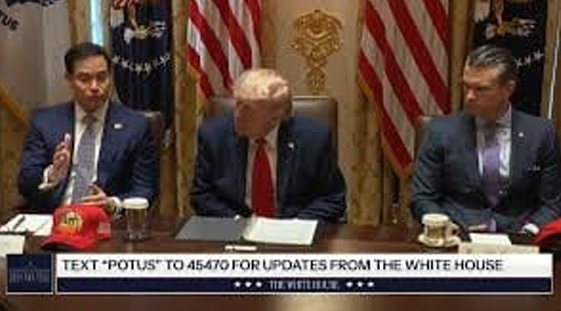
Senior U.S. officials, including President Donald Trump and Secretary of State Marco Rubio, congratulated Prime Minister Nikol Pashinyan on Civil Contract’s victory, with Rubio reaffirming U.S. support for Armenia’s peace agenda and commitment to advancing the outcomes of the Washington Peace Summit and the TRIPP initiative.
Senior EU leaders, including Ursula von der Leyen, who said “The spirit of the Velvet Revolution you led in 2018 is alive and well. Armenia can count on us,” alongside Kaja Kallas, the EU’s top diplomat and High Representative for Foreign Affairs and Security Policy, Marta Kos, the European Commissioner responsible for enlargement policy, Roberta Metsola, President of the European Parliament, and António Costa, President of the European Council, congratulated Prime Minister Nikol Pashinyan on the election outcome, framing the result as a reaffirmation of Armenia’s European trajectory and commitment to deeper EU-Armenia cooperation.
In addition, 12 EU member states, including France, the Netherlands, Austria, and Germany, as well as Canada and Ukraine, sent congratulatory messages supporting Pashinyan’s victory.
Russia Threatens Economic and Political Pressure over Armenia’s Post-Election Western Shift
Russian officials signalled increased pressure on Armenia over its pro-EU trajectory, with Foreign Minister Sergei Lavrov stating that Armenia must “promptly” decide whether it remains in Moscow-led post-Soviet blocs such as the CSTO and the Eurasian Economic Union, warning that EU integration is incompatible with continued membership.
Rubio Visits Armenia to Sign Strategic Partnership and Regional Connectivity Agreements
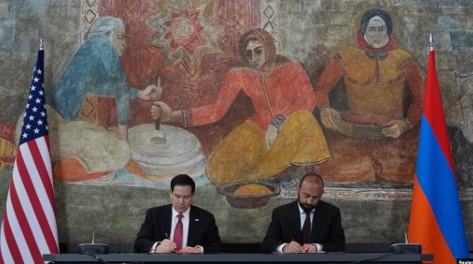
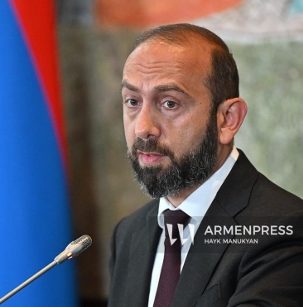
U.S. Secretary of State Marco Rubio and Armenian Foreign Minister Ararat Mirzoyan signed three major agreements in Yerevan. The agreements aim to deepen U.S.-Armenia cooperation, support economic development, and advance implementation of the U.S.-brokered Armenia-Azerbaijan peace framework.
Armenia-U.S. Framework Agreement on TRIPP Published
The TRIPP framework establishes a U.S.–Armenia joint development structure to implement large-scale transport, energy, and communications projects across Armenia. It envisions expanded regional connectivity, investment cooperation, and transit integration while formally reaffirming Armenia’s sovereignty and jurisdiction over all infrastructure areas.
Armenia and U.S. Sign Comprehensive Strategic Partnership Charter
The Charter establishes an overarching framework for expanded cooperation across political, economic, energy, defense, and technological sectors. The agreement emphasizes sovereignty, democratic governance, regional connectivity initiatives, and long-term collaboration in areas including critical minerals, AI, energy security, and defense modernization.
U.S.-Armenia Relations Gain New Momentum with Critical Minerals Agreement
U.S. Secretary of State Marco Rubio announced the signing of a critical minerals agreement with Armenia, marking an important step in strengthening strategic and economic cooperation.
Prime Minister Nikol Pashinyan Presents Armenia’s New Peace-Oriented Army on Republic Day
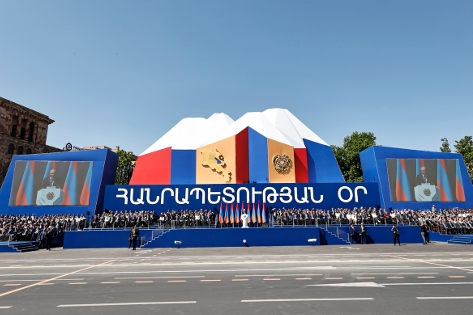
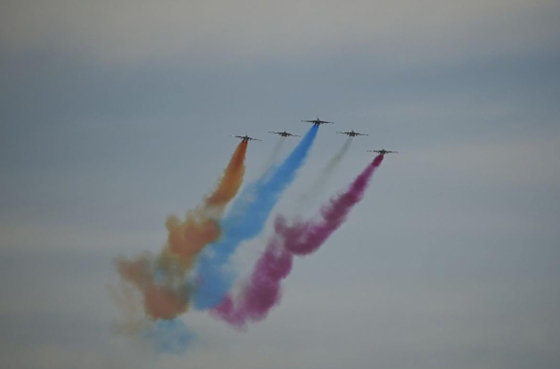
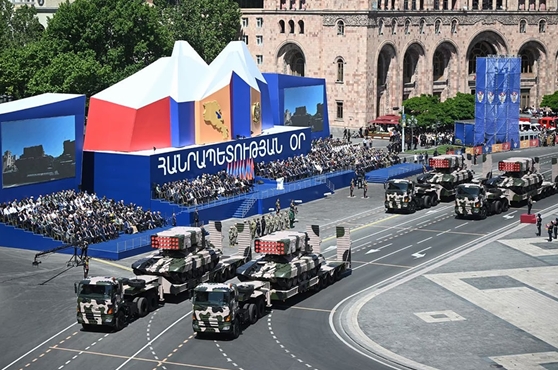
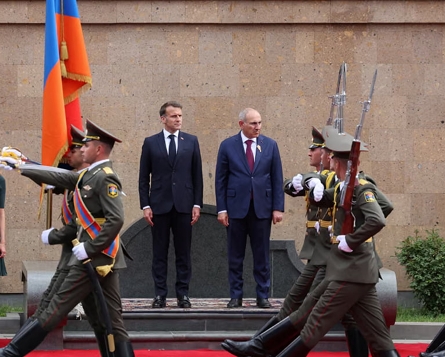
Prime Minister Nikol Pashinyan, together with Armenia’s top state leadership, attended the Republic Day military parade in Yerevan, marking the celebration in what he described as a fundamentally new historical reality shaped by the establishment of peace after decades of conflict.
Azerbaijan’s Ethnic Cleansing in Nagorno-Karabakh
and Genocidal Policy
Tracing Memory: Unfinished Conversations of War
War forces you to look at life without illusions. Though wars end on paper with treaties, they continue to live on in the minds and memories of those who experienced them. In this article, soldiers who participated in the 44-day war give continuity to unfinished questions.
“I want… A peaceful Armenia. Our generation lived through this, and I don’t want the next generation to go through the same thing.” Arsen Kirakosyan, 25, Economist
Armenian Court Orders Nagorno-Karabakh Government-in-Exile to Vacate Yerevan Headquarters
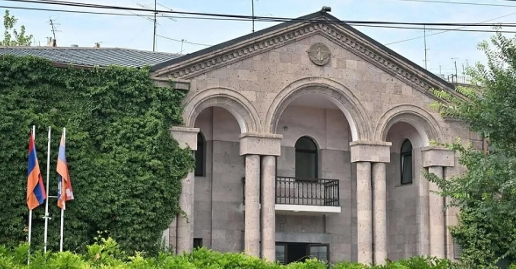
The Republic of Artsakh’s government-in-exile is challenging a court ruling that would strip it of its Yerevan headquarters, a building officials describe as a symbol of Artsakh’s statehood and a key hub for displaced Armenians.
The 28 May 2026 military parade in Yerevan’s Republic Square.
Photo Courtesy of OC Media.
Security
U.S. Briefing: Armenia Election Seen as Precursor to High-Stakes Peace Referendum
A briefing at the U.S. Commission on Security and Cooperation in Europe examined Armenia’s upcoming parliamentary election as a pivotal moment for peace, security, and regional integration.
During the hearing, Michael Cecire, Defense and Security Policy Researcher at RAND Corporation, highlighted Russia’s betrayal, Armenia’s growing strategic importance, and the challenge this shift poses to Moscow’s regional ambitions: “This administration understands that a stable and democratic Armenia is in the interest of U.S. national security…It is hard to overestimate the significance of this pivot because, for years, it was considered a distant dream.”
Russia Ratchets up Pressure on Armenia Ahead of June Election
Russia sharply criticised Armenia on Thursday for drawing closer to the EU, saying it was not pursuing a balanced position towards Moscow and was cooperating with European nations wishing Russia harm.
Armenia is rethinking its place in the world. For decades, Yerevan relied on Russia as its primary security partner. But recent conflicts and rising tensions have fundamentally shaken that relationship. Now, Armenia is looking elsewhere — strengthening ties with the EU, the US, and new regional allies.
U.S.–Armenia Civil Nuclear Cooperation Advances with Small Modular Reactor Studies
U.S. experts from Sargent & Lundy are in Yerevan providing technical assistance on Small Modular Reactor (SMR) technology under the U.S. State Department’s FIRST program.
U.S. Peace Corps Volunteers Return to Armenia’s Syunik Region After Six-Year Hiatus
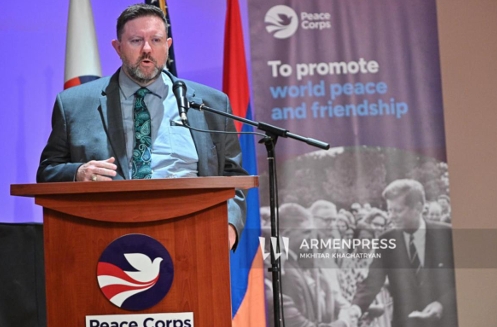
The U.S. Peace Corps has resumed sending volunteers to Armenia’s Syunik region, supporting education, youth engagement, and community development initiatives across Armenia.
DFC Approves $2.5 Billion in Strategic Investments, Launches Flagship U.S.–Armenia TRIPP Development Company
“These deals exemplify the shift in DFC’s strategy. The investments approved in today’s successful board meeting will develop critical infrastructure in Southeast Asia, increase U.S. access to critical minerals, and build the flagship TRIPP Development Company to further peace,” said DFC CEO Ben Black. “DFC is acting with the creativity and confidence worthy of a best-in-class financial institution. Once more, American Prosperity is underwriting a new era of strength, growth, and goodwill for America’s partners.”
What Does Technological Sovereignty Mean for a Small State Like Armenia?
By Elen Tovmasyan
For a long time, sovereignty was understood in familiar terms: borders, security, territory, the ability of a state to make decisions for itself. In the age of artificial intelligence, that idea has started to stretch. Now the term AI sovereignty is appearing more frequently in countries’ innovation and technology policies.
Armenia’s Election could Define Trump’s Caucasus Legacy
By Kamran Bokhari
The June 7 vote may ultimately determine whether Armenia continues its historic geopolitical pivot or returns to the familiar constraints of Russian patronage. Washington should protect its gains and fend off Russian and Iranian interference.
The issue of Armenian and Azerbaijani enclaves has re-emerged in the public discourse during Armenia’s election campaign. On May 16, Prime Minister Nikol Pashinyan was asked about the matter during a campaign event. His multilayered and ambiguous response sparked competing interpretations across Armenia’s deeply polarized political environment.